
 Audrey Blake
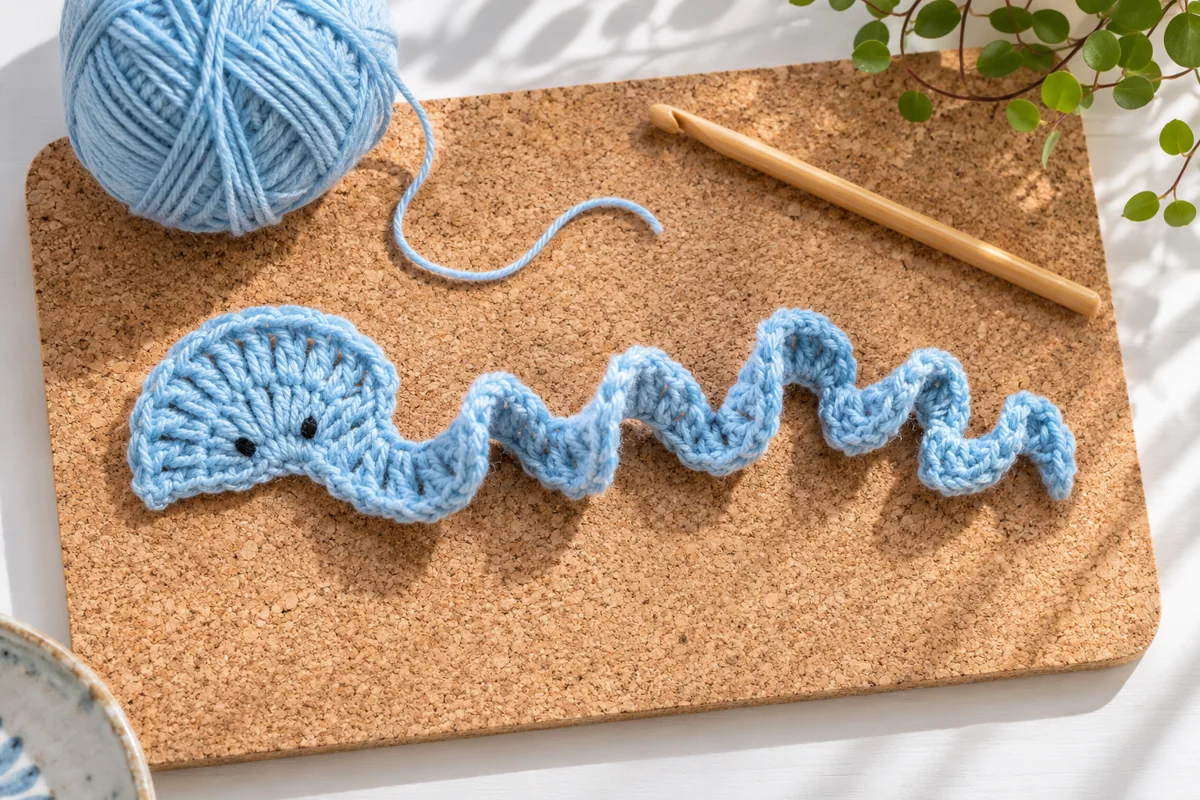
The same construction can be approached through fine cotton, DK cotton or Aran cotton. Each route has its own starting chain and hook. This comparison helps you read those associations without treating commercial yarn labels as exact finished measurements. The stitches remain in the same order whichever route you select.
Materials & size choice
| Size | Cotton | Hook | Starting chain | Ordinary body groups |
|---|---|---|---|---|
| Small | Fine 4-ply cotton | 2.2 mm | 41 | 38 |
| Medium | DK cotton | 3 mm | 36 | 33 |
| Large | Aran cotton | 4 mm | 31 | 28 |
You also need scissors, a tapestry needle, black yarn for eyes and an optional mouth, and contrasting thread to mark the last chain. No stuffing or wire is used. Finished dimensions, gauge, yarn quantity and working time are not supplied by the source; size names describe material combinations, not guaranteed lengths.
US crochet terminology
ch = chain; sc = single crochet; hdc = half double crochet; dc = double crochet; sl st = slip stitch. English uses US terms.
Compare categories, not promises
Yarn-weight names may be presented differently on labels. Use the source category together with fiber and hook information, and note the product you actually choose. Neither the label nor the starting count alone predicts the final centimetre length of a curled piece.
Keep a three-column project note
Record material, tool and foundation count together. Add observations about the relaxed curl after finishing, clearly separated from the original instructions. That distinction helps when a later yarn substitution behaves differently.
Keep the material row together
The complete pattern
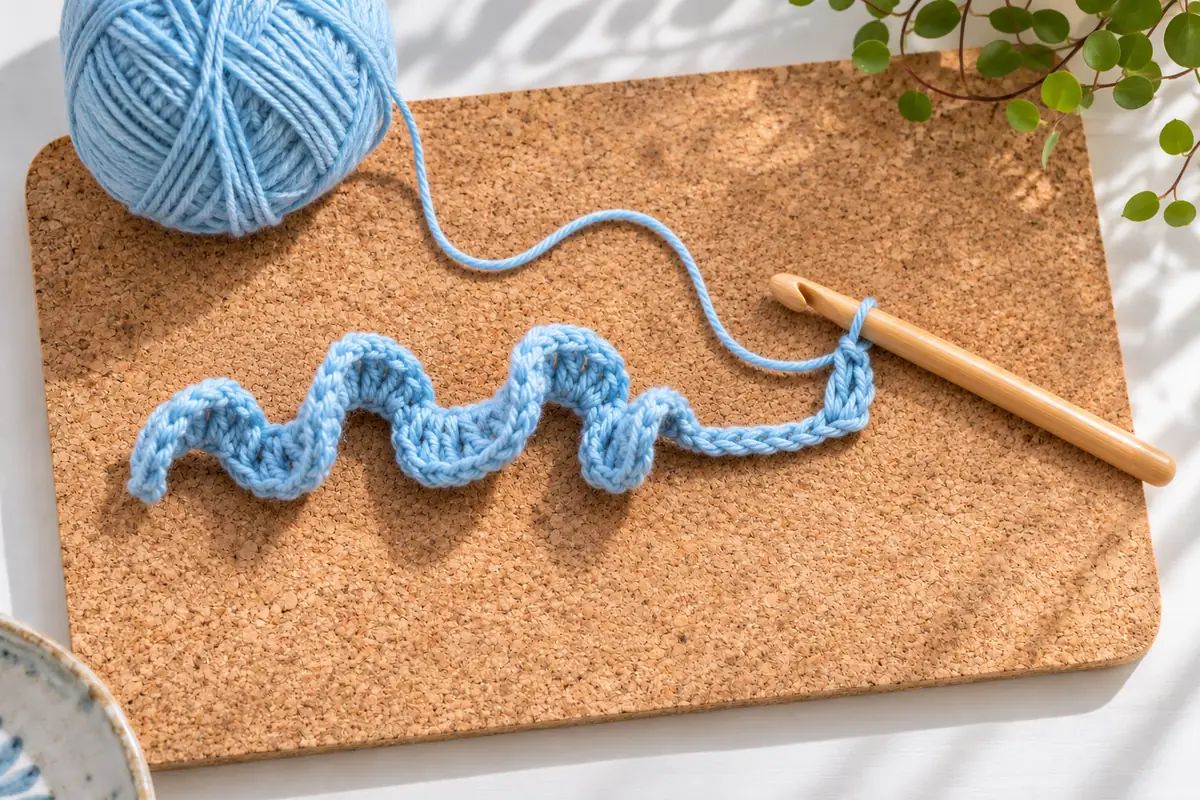
Count the foundation before continuing; the loop on the hook does not count. Skip the chain directly below the hook and begin in the second chain. Mark the last chain at the starting-tail end for the head. Keep the chain relaxed enough to receive several stitches in each insertion point.
Small
- With fine 4-ply cotton and a 2.2 mm hook, chain 41.
- Begin in the second chain from the hook. In that same chain work 1 sc, then 2 hdc.
- Work 3 hdc into each following chain, leaving the very last chain unworked for the head (38 ordinary body groups).
- Into that single last chain work the entire head: 1 hdc, 14 dc, 1 hdc, 1 sl st.
- Fasten off and weave in the ends on the back of the head.
Medium
- With dk cotton and a 3 mm hook, chain 36.
- Begin in the second chain from the hook. In that same chain work 1 sc, then 2 hdc.
- Work 3 hdc into each following chain, leaving the very last chain unworked for the head (33 ordinary body groups).
- Into that single last chain work the entire head: 1 hdc, 14 dc, 1 hdc, 1 sl st.
- Fasten off and weave in the ends on the back of the head.
Large
- With aran cotton and a 4 mm hook, chain 31.
- Begin in the second chain from the hook. In that same chain work 1 sc, then 2 hdc.
- Work 3 hdc into each following chain, leaving the very last chain unworked for the head (28 ordinary body groups).
- Into that single last chain work the entire head: 1 hdc, 14 dc, 1 hdc, 1 sl st.
- Fasten off and weave in the ends on the back of the head.
Compare construction, not length
Check your work
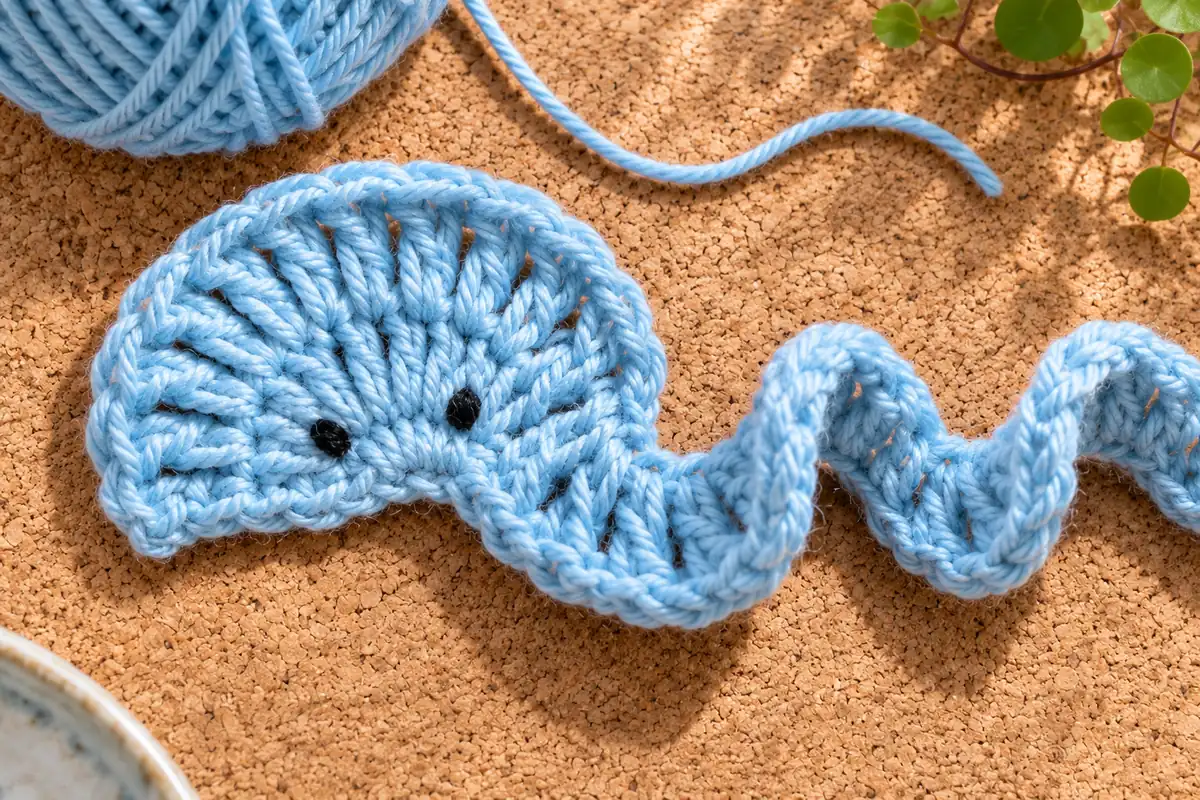
The source calls the pattern untested. The chain positions and stitch sequence have been checked mathematically; no physical crochet test is claimed. If the curl is loose, check that each ordinary chain contains three hdc, not one hdc in each of three chains. If the head is elongated, check that all fourteen dc and both hdc are in the single final chain.
Record the finishing details
Foundation-chain audit
Skipped chain + first group + ordinary groups + head chain
| Small | 1 + 1 + 38 + 1 = 41 |
|---|---|
| Medium | 1 + 1 + 33 + 1 = 36 |
| Large | 1 + 1 + 28 + 1 = 31 |
Face and finishing
Lay the head flat. Mark two eye positions with contrasting thread and embroider a few black stitches. An embroidered mouth is optional. Secure ends across several stitch loops on the back without a bulky knot on the front; leave no long loose ends or easily released loops. The source also lists self-adhesive eyes of 6, 8 and 10 mm for small, medium and large respectively. Embroidered eyes are preferred; glued parts do not establish child safety. This decoration has no toy-safety certification.
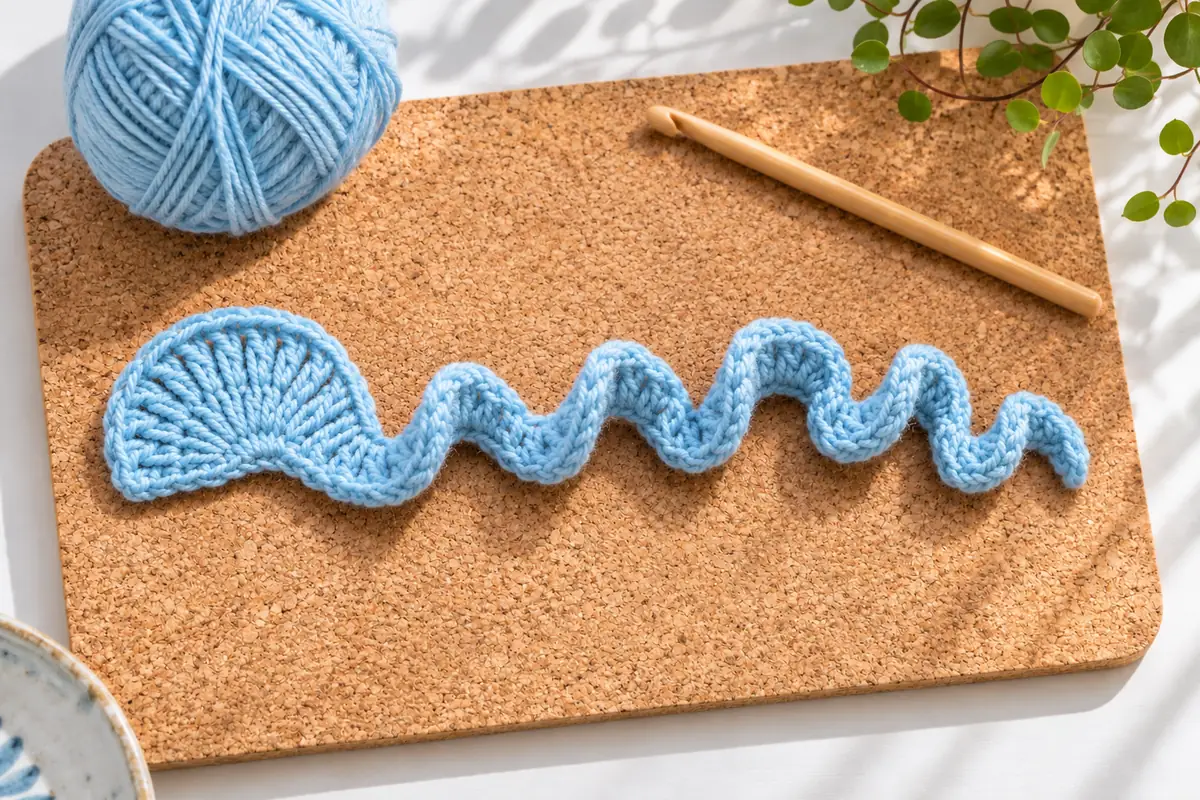
Arrange the spiral gently with your fingers; do not sew it into a tube or attach a separate head. Clean according to the yarn label and the eye attachment used. The source mentions a smaller hook for the foundation as an optional way to explore a tighter curl, but gives no size. It is not required for these three versions.
Keep your pattern notes together
Save your chosen yarn, hook and chain count together before starting another version.